Rethinking Modernism
"What if intimacy became a measure of good architecture?"
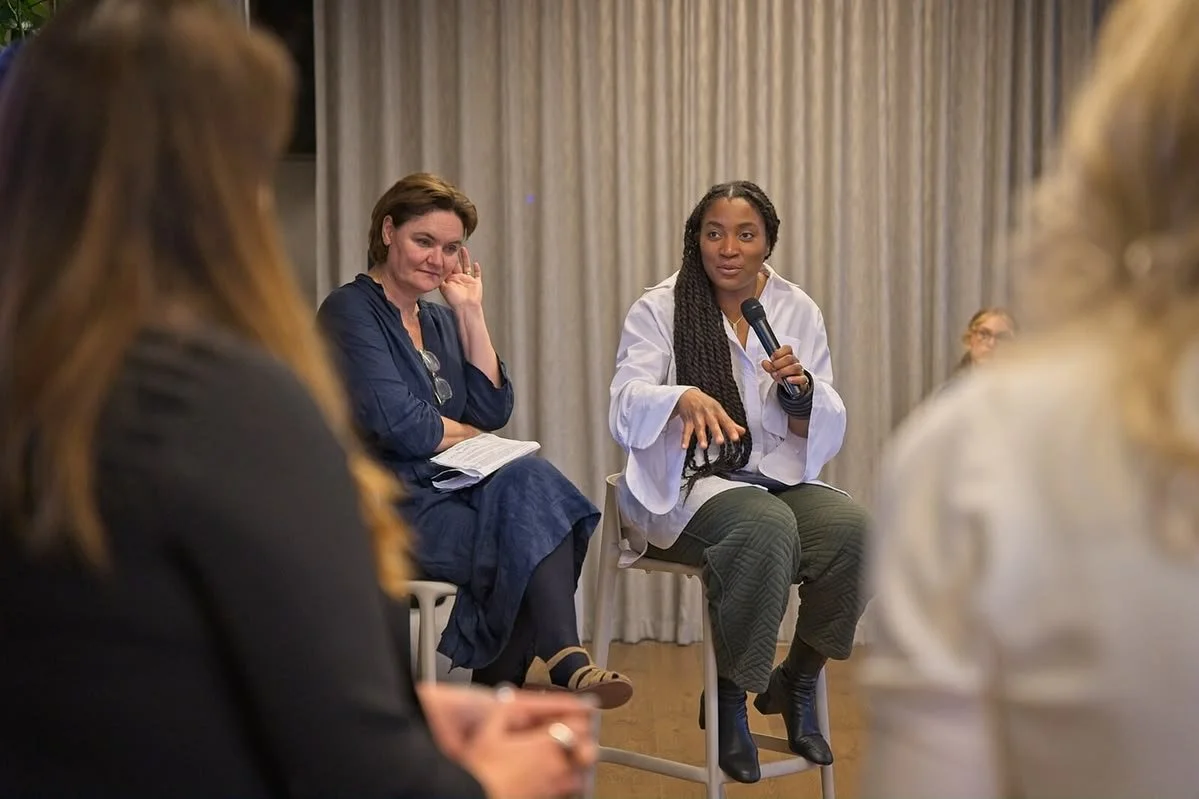
I was recently invited to speak as part of a panel exploring the legacy and future of twentieth-century Modernism. Rather than looking backwards, I found myself asking a different question: what kind of architecture do we need now?
For the last few years I've been using the phrase intimate architecture to describe my practice. It emerged almost accidentally, but the more I make, the more I realise it sits at the centre of everything I do. Whether through furniture, sculpture, painting or public installations, I'm interested in the ways objects and spaces mediate our relationship to ourselves, to one another and to the environments we inhabit.
Modernism gave us an extraordinary visual language and a belief that design could improve society. Yet many of its spaces were conceived at the scale of systems rather than individuals. Today, as our cities become increasingly dense and digitally mediated, I wonder whether architecture might once again begin with the body—not simply as something to be accommodated, but as something to be understood.
Perhaps intimacy is not the opposite of monumentality. A public square, a pavilion, a bench or a painting can all create moments of pause, belonging and connection. Scale alone doesn't determine whether a space feels human; the emotional experience it enables does.
Preparing the presentation was a useful reminder that the ideas developed through making often reveal themselves most clearly when spoken aloud. It also reinforced my belief that the boundaries between art, design and architecture are becoming increasingly porous. The conversations I have through sculpture are often the same conversations I find myself having about cities.
I'm beginning to think that intimate architecture is less a description of my work and more a proposition for how we might imagine the spaces of the future.