Craft Beyond the Workshop
"Where does craft begin?"
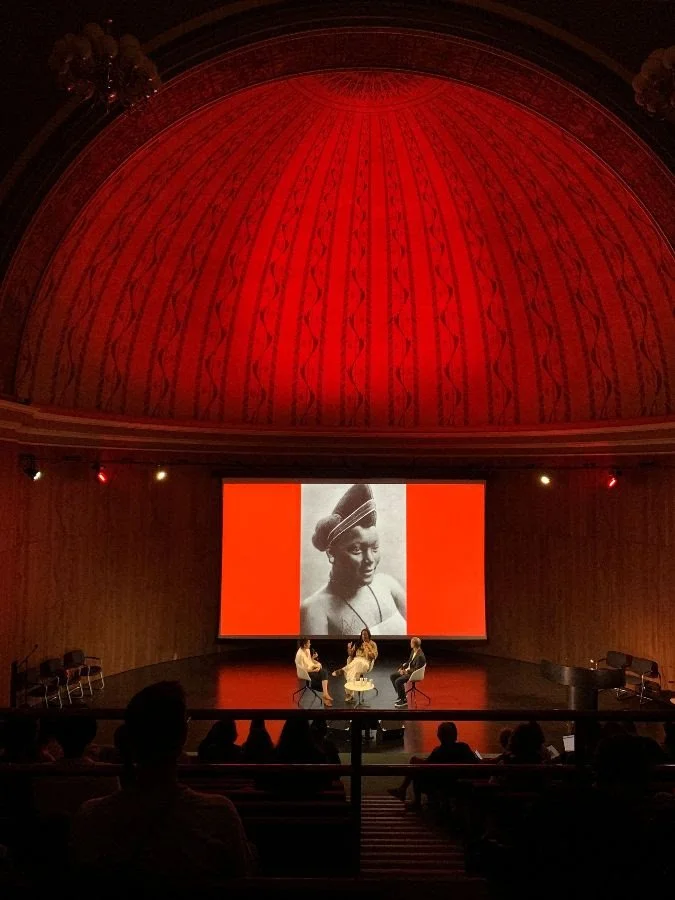
In 2023, I was invited to speak at the Victoria and Albert Museum as part of the Global Design Forum, joining architect Takeshi Hayatsu for a conversation on Tradition, Craft and Community.
Rather than presenting my own projects, I chose to focus on something that has long fascinated me: hair as a material of craft.
When we think about craft today, we often imagine specialist workshops, skilled makers and carefully honed techniques. Yet some of the most extraordinary examples of craftsmanship exist far beyond these conventional definitions. They live within families, neighbourhoods and communities, passed from one generation to the next through observation, repetition and care.
During the talk I shared historic African hairstyles—remarkably sculptural forms that feel almost futuristic in their complexity. Created entirely from natural hair, these intricate constructions demonstrate an extraordinary understanding of material, structure and form. They are works of design, but also repositories of identity, heritage and belonging.
When asked why I had chosen to speak about hair, my answer was simple. Craft is not defined by the tools we use or the institutions that celebrate it. It is equally present in the practices we overlook—those embedded within everyday life and sustained through community.
Across many African cultures, as well as in Indigenous Hawaiian traditions and throughout periods of European history, hair has carried profound social and cultural meaning. It has communicated identity, age, status, spirituality and kinship. While contemporary conversations around Black hair often frame these traditions as acts of rediscovery, the knowledge itself has never disappeared. It has always existed within communities, waiting to be recognised and valued.
That conversation continues to influence my own practice. It reminds me that materials are never neutral. They carry histories, and with them, ways of understanding ourselves and one another. Sometimes the role of the artist is not to invent something new, but to help us recognise the significance of what has always been there.